Write a comic strip story
Updated: Sep 26

Do you love drawing characters and making things happen?
Then why not tell your story as a comic?
A comic is a story told using a mixture of pictures, words and dialogue. You don't need lots of writing because your pictures help tell the story too.
You can draw your own panels or find some to print out here
What's a panel?
A panel is one box in your comic.
Each panel shows a moment in your story.
For example:
Panel 1: Sam finds a strange key.
Panel 2: Sam tries the key in a mysterious door.
Panel 3: The door opens.
Panel 4: Something surprising is waiting on the other side.
You don't need to show every single thing that happens. Choose the important moments.
Speech bubbles
Speech bubbles show what your characters say.
“Look at this!” said Sam.
Try to keep your speech bubbles fairly short. Your pictures can show lots of the action.
Thought bubbles
Thought bubbles show what a character is thinking. Like this:
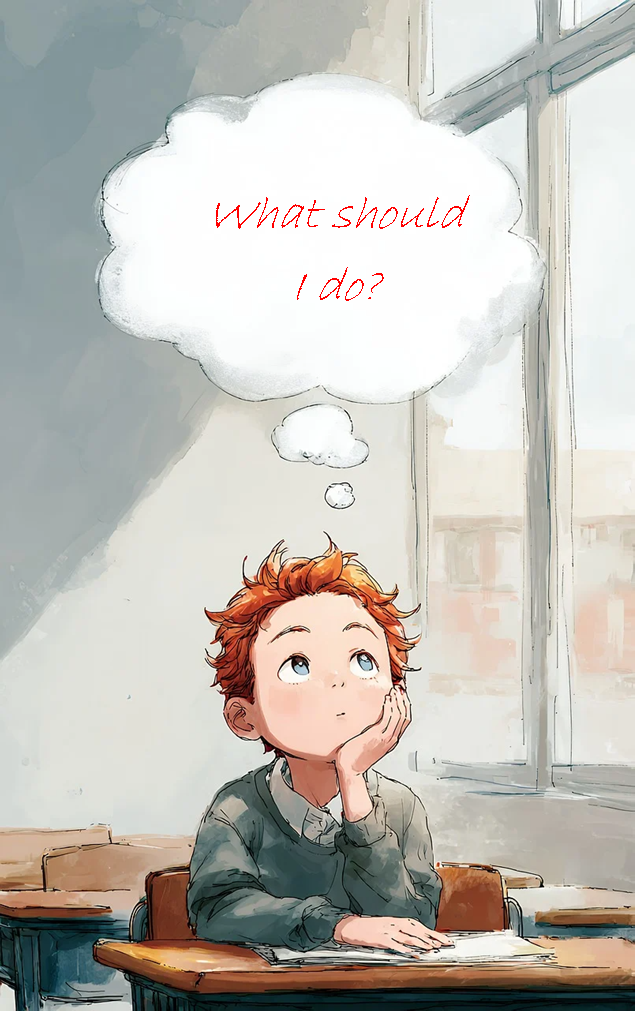
You can use these when your character is thinking something they don't say out loud.
Captions
Captions are little boxes in the panels that give the reader extra information. For example:
Later that evening...
Meanwhile, across the forest...
The next morning...
Think like a film director!
Before you start drawing, imagine your story like a film.
Ask yourself:
What does the reader need to see?
What happens first?
What happens next?
What is the exciting bit?
How does it end?
A useful trick is to make a tiny plan first. You can draw little boxes and make very quick sketches inside them. They don't need to be good drawings, they're just there to help you work out your story and what should happen in each panel.
YOUR COMIC PLAN
Beginning
Who is your main character?
Where are they?
What happens to start the story?
Middle
What problem or adventure do they have?
What happens next?
What is the most exciting moment?
Ending
How does the problem get solved?
How does your story end?
Now turn it into a comic!

You can use a blank comic grid or comic-book page template.
Plan your story one panel at a time.
Panel 1
What do we see?
What does anyone say?
Panel 2
What changes?
What does anyone say?
Panel 3
What happens next?
What does anyone say?
Panel 4
What goes wrong — or what gets exciting?
Panel 5
What does your character do?
Panel 6
How does the story end?
COMIC-MAKING TIPS
Show, don't explain.
If your character is running, draw them running instead of writing Sam ran very fast.
Keep speech short.
A few words can be much more exciting than a giant speech bubble.
Use expressions
Happy faces, worried faces, surprised faces and angry faces can tell the reader how your characters feel.
Make things happen
Try action words such as:
CRASH! BOOM! WHOOSH! SPLASH! BANG! GULP!
Think about what happens between the panels.
You don't have to draw every little movement. The reader's imagination can fill in some of the gaps.
Leave room for your words.
Draw your speech bubbles and captions before you fill the whole panel with your picture. That way, your words won't get squashed into a tiny corner.
READY FOR A CHALLENGE?
Try making a comic with NO WORDS AT ALL.
Can your reader understand what happens just from your pictures?
Or try making a comic with only three panels:
1. Something happens.
2. There's a problem.
3. Something changes.
That's a whole story!
Remember...
Your comic doesn't have to look like anyone else's.
You don't need to be a brilliant artist.
Stick people can tell great stories!
What matters most is having a good idea and making your reader want to know:
“What happens next?”
Image credits on this page: pixabay artists.